
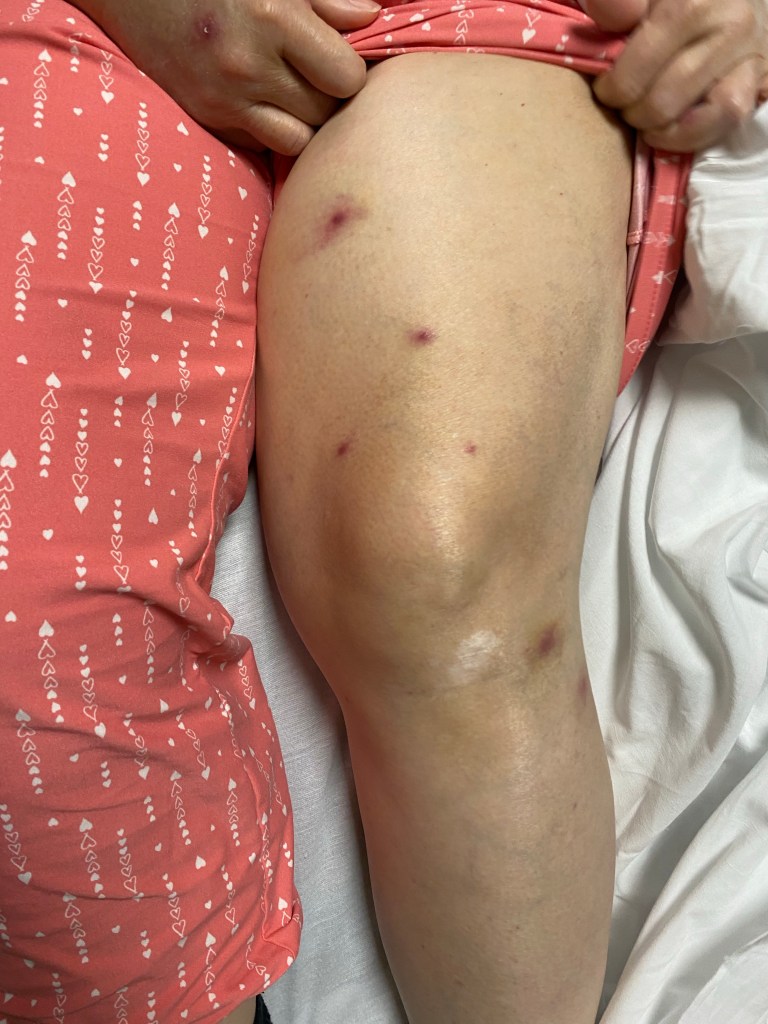
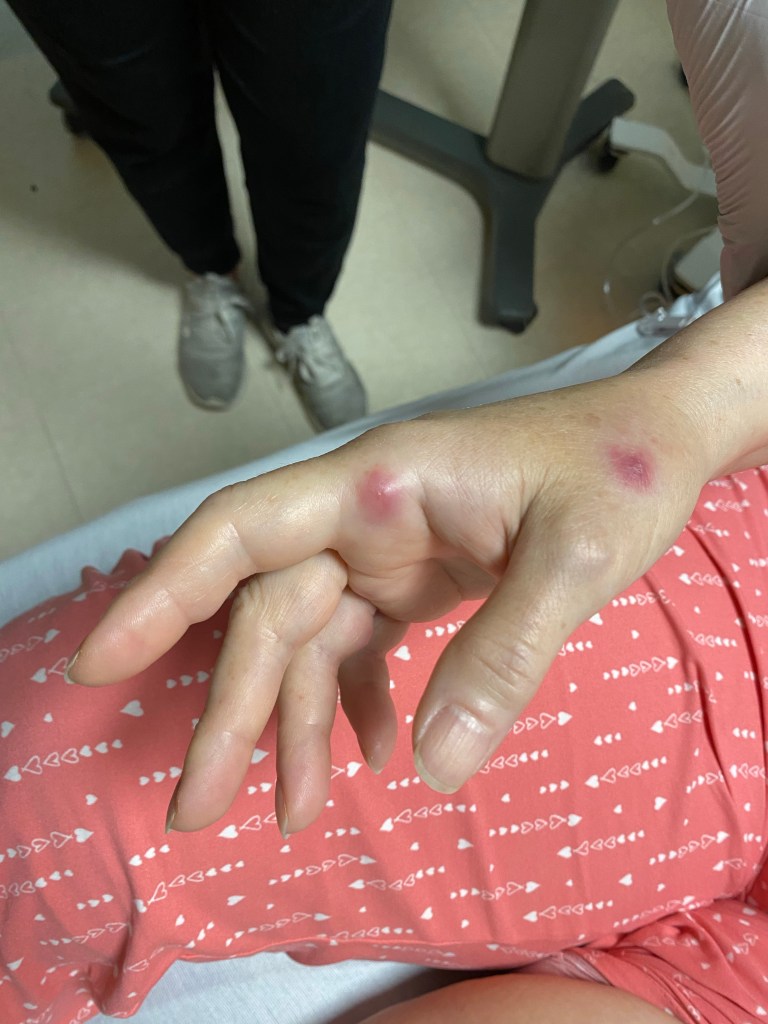
Vignette: A middle aged woman with MDS status post allogeneic stem cell transplant with delayed engraftment develops neutropenic fever with a new rash. She is empirically started on IV cefepime. Her preliminary workup is negative. Fevers persist and ID is consulted. On exam, you note erythematous lesions in varying stages of evolution, some of which exhibit central necrosis with surrounding erythema. The lesions are tender to touch. Dermatology performs a skin biopsy of the lesion which reveals septated acutely branching hyphae and culture grows Fusarium solani. ID starts voriconazole and the patient’s fever abates.
Diagnosis: Disseminated Fusariosis
Key Points:
- Risk factors for disseminated Fusariosis: prolonged and profound neutropenia and/or heavy cellular immune suppression (such as BMT patients undergoing treatment for GVHD)
- Skin lesions present in 60-80% of disseminated Fusarium
- Skin biopsy crucial to diagnosis – obtain a skin biopsy ASAP with pathology, bacterial/fungal culture
- Blood cultures may be positive (40% in disseminated cases)
- Drug of choice: voriconazole
- Mortality is high (75%), therefore prompt recognition is vital to early treatment initiation
- More information:
- CLINICAL MICROBIOLOGY REVIEWS, Oct. 2007, p. 695–70 (DOI: 10.1128/CMR.00014-07)
 Infectious Disease Atlas