
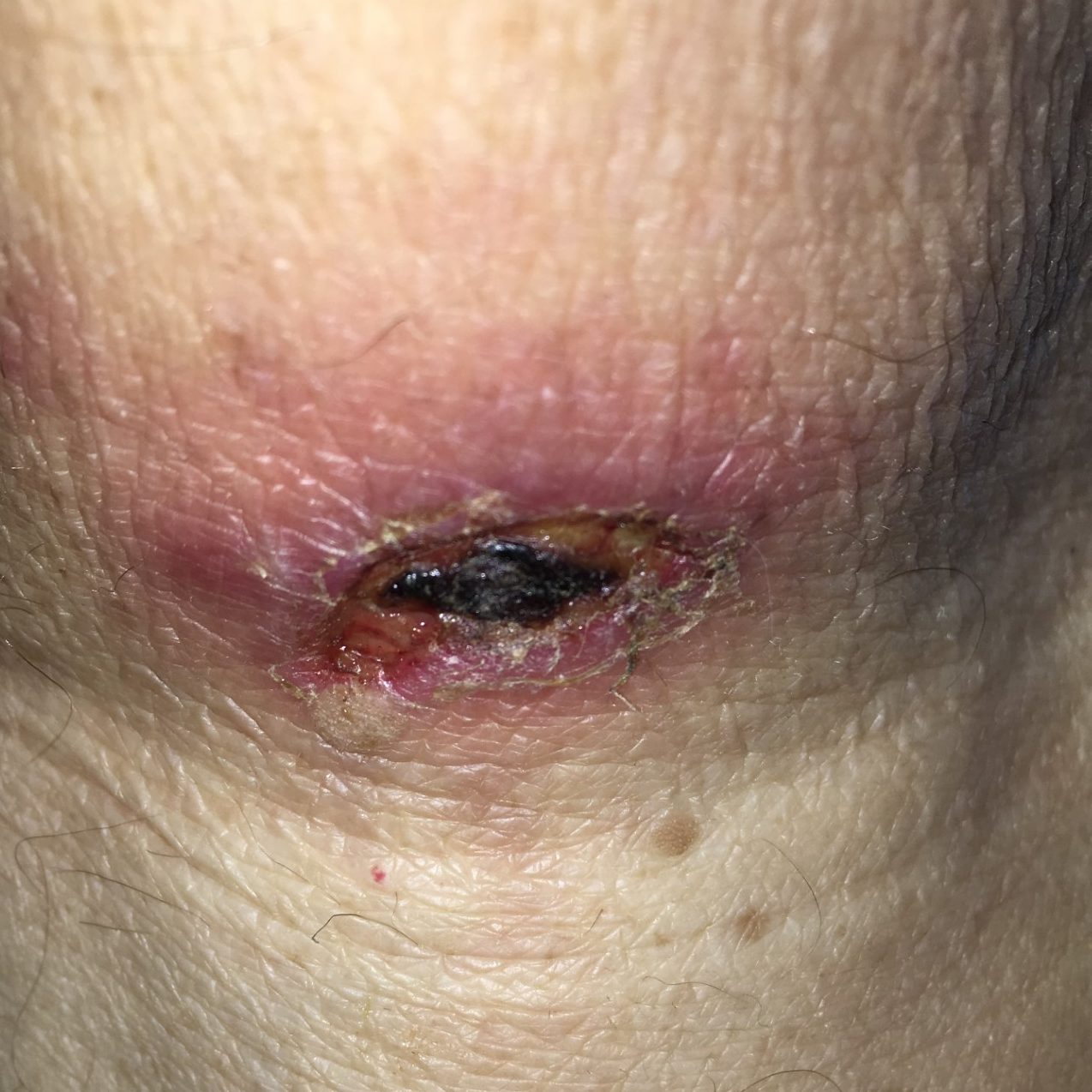
Key Points:
- Tularemia is a rare, highly virulent zoonotic disease caused by Francicella tularensis.
- It is transmitted commonly through arthropods such as ticks and deer flies, as well as vertebrates such as rabbits.
- Tularemia occurs throughout North America, Europe, Asia, and the Middle East
- There are 6 major clinical forms of disease depending on route of entry. Overlapping forms occur.
- Ulceroglandular tularemia (most common)
- Glandular tularemia
- Oculoglandular tularemia
- Pharyngeal (oropharyngeal) tularemia
- Pneumonic tularemia
- Typhoidal tularemia
- A detailed social history is imperative as the diagnosis requires a high index of suspicion given its rarity.
- Frequently, patients attribute the classic eschar of ulceroglandular disease to a spider bite, however these bites are uncommon and rarely cause systemic symptoms. Unless a spider is seen, physicians should pursue other diagnoses.
- Many providers associate tularemia only with rabbit exposure, which may lead to a delay in diagnosis. Since the decline in tularemia after the 1960’s, the most common mode of transmission in North America is through tick bites, specifically the dog tick (Dermacentor variabilis), wood tick (Dermacentor andersoni), and lone star tick (Amblyomma americanum).
- As is the case with all tick bites, co-infection is common which should be investigated and may require additional treatment.
- Treatment:
- Severe disease: aminoglycoside (gentamicin, streptomycin)
- Mild to moderate disease: fluoroquinolone (cipro)
- Alternative agent: doxycycline
Reference: Malik, M; Schatz, A; Sexton, TH; Warner, NC. THE SPIDER BITE THAT WASN’T: A NECROTIC ULCER IN AN OUTDOORSMAN. Abstract published at Hospital Medicine 2017, May 1-4, 2017; Las Vegas, Nev. Abstract 703. Journal of Hospital Medicine Volume 12 Suppl 2. https://shmabstracts.org/abstract/the-spider-bite-that-wasnt-a-necrotic-ulcer-in-an-outdoorsman/.
 Infectious Disease Atlas